In development. Details, dates and fees will be announced once confirmed. Register your interest and we will contact you first.
Programme overview
Knightsbridge Academy is developing a comprehensive blended learning programme in orthodontics for general dental practitioners. It takes you from the fundamentals of orthodontic assessment through to treatment planning, fixed appliance mechanics, finishing, retention and clear aligners.
Around 60 hours of learning are planned.
Three ways of learning
Recorded online lectures
Study at your own pace, when it suits your practice and your family.
Live online sessions
Case-based practicals and discussion with your programme leader and colleagues.
Face-to-face in London
Two visits with hands-on typodont work and practical sessions.
Your programme leader: Professor Parmjit Singh
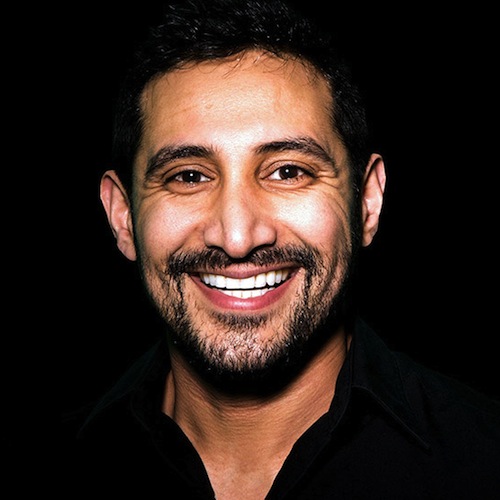
Professor Parmjit Singh is Professor of Orthodontics at the College of Medicine and Dentistry, Birmingham, where he is Course Director for the Master in Clinical Orthodontics. He leads the programme and is responsible for its clinical content and teaching.
- Qualified as a dentist at the University of Newcastle in 2001, then worked in general practice and at three undergraduate teaching hospitals in London.
- Specialist orthodontic training in London, Essex and Suffolk, to consultant level. Has worked as a locum consultant at Chelsea and Westminster Hospital and Ipswich Hospital.
- Special interests in adult orthodontics (Masters in smile aesthetics) and orthodontic retention, on which he has lectured and published. Provides the full range of appliances, including Invisalign.
- Holds the Certificate in Learning and Teaching and is a Senior Fellow of Advance HE.
- Orthodontic lead for the Diploma in Orthodontics delivered in Accra, Ghana, with the City of London Dental School. Also ran a Certificate in Orthodontics in Istanbul with Vesta Academy.
- Examiner for the Royal College of Surgeons’ LDS and MFDS, and chair of the examination for its Diploma in Orthodontic Therapy. Subject matter expert at the National Examining Board for Dental Nurses, and clinical adviser to the General Dental Council.
- Member of the British Orthodontic Society and the European Orthodontic Society.
What the programme will cover
The curriculum is organised into 15 modules.
- Introduction and overview. How the programme works.
- Patient assessment. Classifications in orthodontics and orthodontic patient assessment.
- Orthodontic records. Records overview, clinical photography, cephalometry and panoramic radiographs.
- Consent in orthodontics. Problem lists, aims of treatment, consent and orthodontic risks.
- Growth and development. Growth and interceptive orthodontics.
- Orthodontic bonding. Instruments and materials, separation, banding, bonding, fixed appliances and the Six Keys, appliance prescriptions and ligation.
- Class I malocclusion. Treatment planning, typodont exercise, bracket placement and treated cases.
- Basics of treatment mechanics. Archwire sequencing, anchorage and friction.
- Space planning. Extractions and inter-proximal reduction.
- Orthodontic mechanics. Deep bite, open bite, transverse correction and asymmetry management.
- Class II malocclusion. Treatment planning and treated cases for Class II division 1 and division 2.
- Class III malocclusion. Treatment planning and treated cases.
- Finishing and wire bending. Typodont exercises for Class II and Class III, and supplementary mechanics.
- Orthodontic retention. Finishing and wire bending, debonding, bonded retainers and retention protocols.
- Aligners. Introduction to aligners, reviewing a digital set-up, biomechanics and getting results.
Learning and assessment
Learning builds step by step.
- Early modules establish diagnosis, records and consent.
- Later modules move into appliances, mechanics and complex cases.
- Progress is checked through two progress tests during the programme and an end-of-course test.
Hands-on training in London
The practical elements are delivered face to face in London. They include bonding, banding, ligation, typodont exercises, wire bending, debonding and retainer placement.
Participants will attend two visits of two days each, so that everything learned online can be put into practice under supervision.
Who is it for?
Dentists who wish to build a structured foundation in orthodontics and to develop their confidence in treating patients with fixed appliances and aligners.
Programme content and structure are in development and may change before launch.